
Designed, Not Assembled: Planning the Outdoor Event Environment
The music is the reason people bought the ticket. So is the race, the chef, the flowers, the film. Every outdoor event is built around content - something worth showing up for. The organisers know this. They spend months on it.
But there are two events with equally strong programmes, and one of them feels right the moment you arrive. The other doesn't. You can't quite put your finger on it, but something is off - flat, uncertain, slightly incoherent. You find yourself checking the map more than once. The zones don't feel distinct. The whole thing looks like it was assembled rather than designed.
The difference isn't the content. It's the environment the content happens inside.
The environment speaks before the programme does
An event site communicates before a single act performs, a race begins, or a bottle is opened. From the approach road to the entrance, through the first visual encounter with the site, attendees form an impression - of scale, ambition, organisation, identity. Most of that impression is formed through the physical environment: what they see, how they're directed, what the space feels like.
This is not a small thing. It shapes expectation. And expectation shapes how the content lands. An event that feels chaotic on arrival is fighting an uphill battle before the headline act walks on stage. One that feels considered and purposeful primes people to receive it well.
The visual environment rarely gets the same planning horizon as the programme. That's often unavoidable - it depends on confirmed site layouts, finalised zone plans, signed partner agreements. Those things take time to land. But left too late, or spread across too many separate suppliers and decisions, the environment tends to end up assembled in parts rather than designed as a whole. And that shows.
What arrival actually communicates
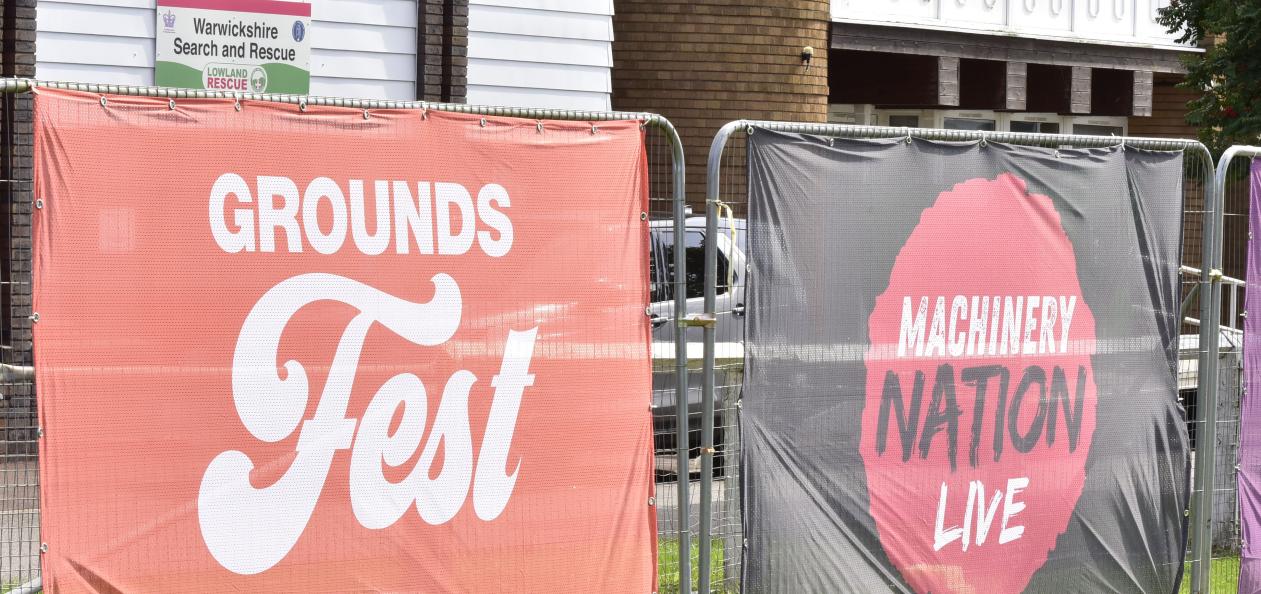
The first thing most attendees experience is wayfinding - and wayfinding is not just functional. Arrival graphics at an outdoor event work across multiple surfaces, at multiple distances, often for a crowd with no prior knowledge of the site. A spectator approaching a stage city, a visitor walking into a showground, a runner moving through streets lined with event branding: all of them are forming an impression from the visual environment long before they experience the content.
When arrival graphics are scaled correctly, materially suited to outdoor conditions, and visually coherent with the event identity, they do a significant amount of atmospheric work. They don't just point people in the right direction - they tell people what kind of event they're at.
When they're not, the event starts at a disadvantage.
Inside the event: coherence and distinct spaces
Once inside, the environment continues to work - or to undermine. Large outdoor events face a specific challenge: how do you make a temporary site feel intentional? How do you give different zones distinct identities without fragmenting the overall feel?
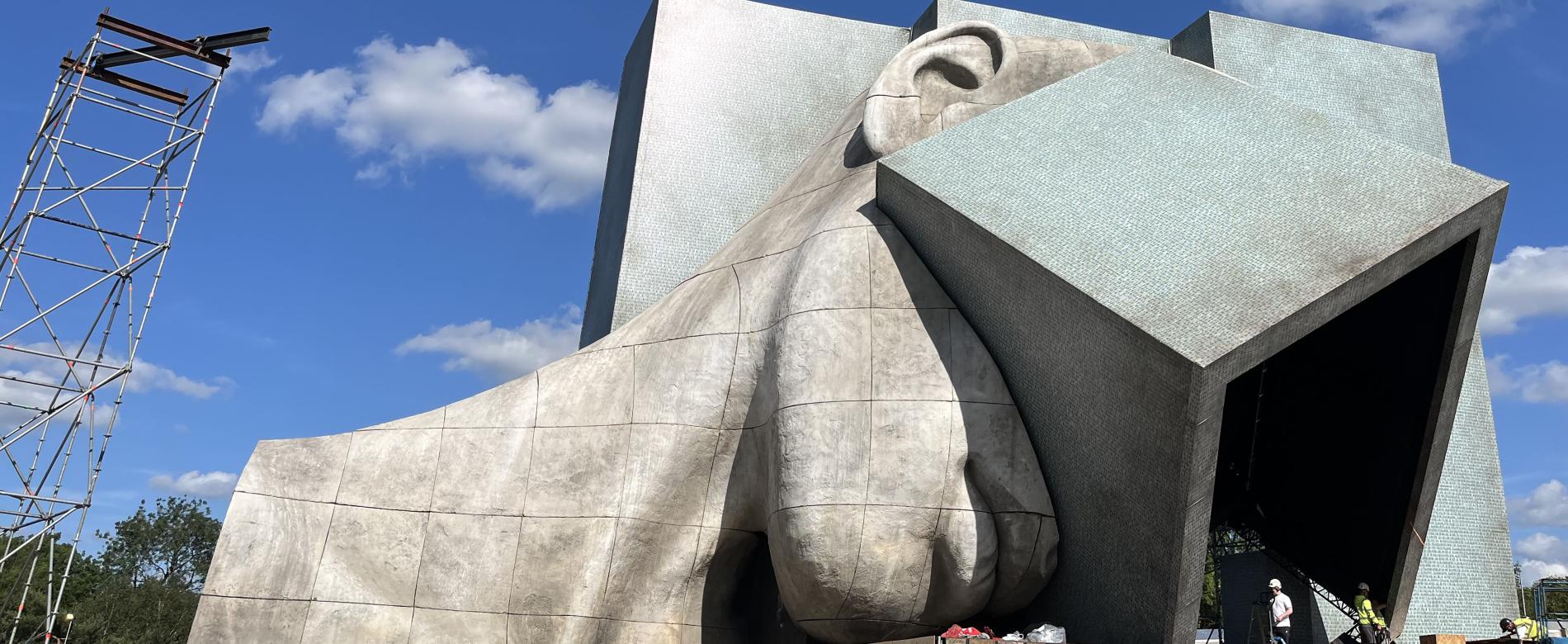
Physical structures provide the bones. But it's graphics and visual treatment that give a space its character - the thing that tells you this zone is different from the last one, that this brand's presence means something, that this area of a field belongs to this event. Scale, colour, surface coverage, and visual consistency are what transform a set of marquees and fencing into a coherent site. Applied to the right surfaces, at the right scale, they can turn scaffold into something iconic: the Glastonbury stage structure that returns every year isn't just a pile of steel in a field - the graphic skin applied to it is what creates the image that's recognised instantly and shared endlessly.
Aldi's presence at the Royal Highland Show is a good example of how well-executed visual environment works at event scale. The 25m x 20m space combined working kitchen, sampling, and supplier showcase - but what made it land as a destination rather than a stand was the visual environment wrapping it: bold branded graphics, clear messaging, a space that looked complete and purposeful within a large and noisy site. Visitors explored it. They engaged with it. It did the job it was designed to do.
That kind of presence doesn't happen by default. It's a deliberate decision about what the environment should communicate - made early enough to be executed properly.
The environment is what people photograph
Here's something that matters particularly to marketing and sponsorship teams: the content is rarely what gets shared on social media.
People can't get a selfie with the headliner. They can't photograph the winning garden in a way that does it justice. What they can do - and what they do, in their thousands - is photograph the environment they're inside. The stage that frames the act. The arch they run under at the finish line. The striking branded entrance. The graphic-wrapped structure at a festival that's been in their camera roll since Friday.
The environment is the content that gets shared. Which means it's also the earned media. For sponsors, it's where logo visibility translates into organic reach. For organisers, it's where the atmosphere of the event travels beyond the site and the day. A well-designed environment generates media that no photographer was briefed to capture - because attendees capture it themselves.
This doesn't happen by accident. The moments that get photographed are almost always designed moments: a bold graphic treatment, a distinctive visual surface, a piece of environment that gives people something worth putting in frame. If the brief doesn't include "what will people photograph here?", it's leaving media value on the table.
Where execution makes or breaks it
Good environment design is a starting point, not a guarantee. Outdoor events present physical demands that don't exist in controlled indoor spaces: weather loading, ground conditions, installation logistics across a live and active site, timeline pressure from other contractors.
Material choices that work in a design presentation need to work in wind, in rain, and on uneven ground. The gap between a well-designed event environment and one that actually delivers on site is almost entirely an execution question. Who is managing production? Who is coordinating installation? Who is accountable for the finished result looking the way it was designed to look?
These are not glamorous questions, but they're the ones that determine whether the environment enhances the event or quietly undermines it.
The work that makes it possible
Service Graphics delivers the physical environment that events happen inside - large format print and graphics, wayfinding systems, surface treatments and wraps, and end-to-end installation from site survey through to the finished result on the ground.
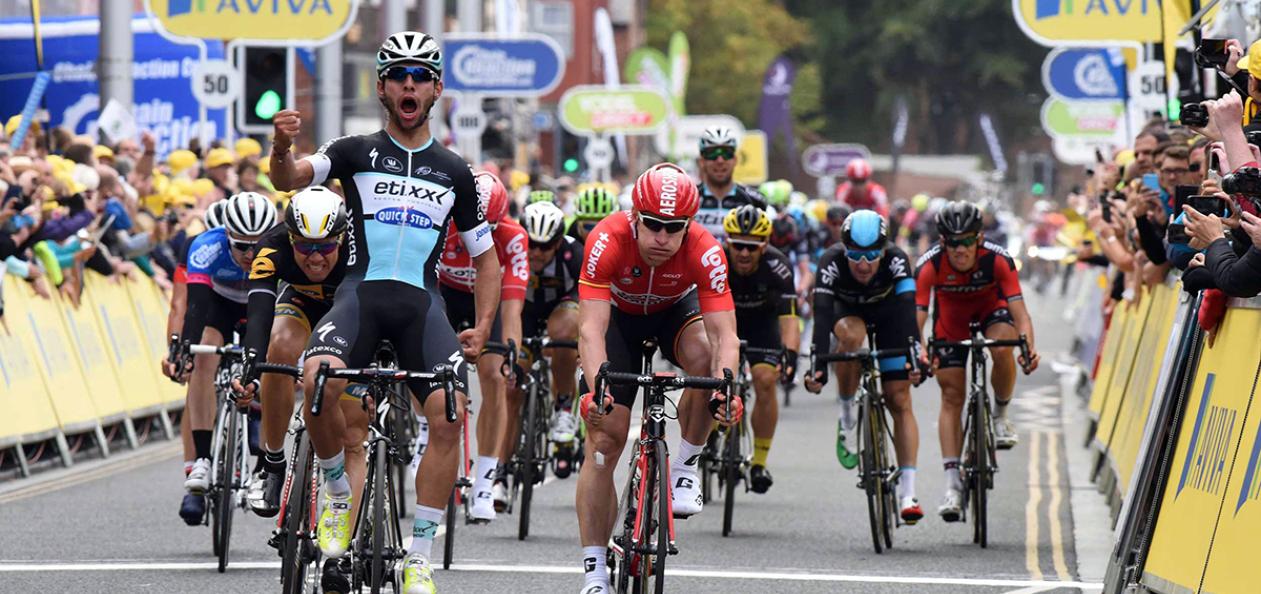
At the Women's Rugby World Cup 2025, that meant the full graphics package across multiple venues - site surveys, creative development, scheduling, production, and installation. At the UEFA Women's EURO final in Basel, it meant pitch graphics produced and installed to broadcast standard for one of the most-watched matches of the year. At the London Marathon, it meant branding across the capital that added atmosphere for runners and spectators in equal measure.
In each case, the work wasn't the experience. But it was what made the experience possible to feel.
If you're planning an outdoor event for this summer or beyond, we'd be glad to talk through the environment.
Heading
Read Next...
After The Gates Close: Practical thinking on outdoor event sustainability
Heading
Learn More...
Events & Experiences Signage