

Visual Communication Isn’t Just Print
Most organisations still approach visual communications with a simple question: “I need some graphics - who can print them?”
It’s understandable. Historically, print was a transactional service: send artwork, get graphics back. But projects today look very different. They involve live environments, multiple sites, tight windows, safety considerations, specialist materials, and brand experiences that need to hold up under scrutiny - often in front of thousands of people.
And when the stakes are higher, the old “print supplier” model quietly becomes a liability.
This isn’t about buying more services. It’s about reducing the risk around your project.
Here’s what actually changes when you shift from a print supplier to a visual communications partner - and why it saves you time, stress and money.
1. A Supplier Prints What You Send
A Partner Helps You Get It Right From the Start.
With a print supplier, the job starts when your artwork lands in their inbox.
With a visual communications partner, the job starts earlier - when questions like these are still unresolved:
- Will the material work in this environment?
- Will the colour hold under harsh lighting?
- Is the surface you’re installing onto suitable?
- Is the design readable at the required distance?
- Is there a safer or more durable alternative?
On fast-moving projects, those decisions often need resolving immediately.
For example, a large exhibition activation delivered in just 10 days required concepting, technical planning, build, vehicle logistics and on-site support. That level of early involvement prevented costly rework and protected the client’s deadline.
This isn’t about “more service” - it’s about fewer surprises.
2. Creative and Technical Expertise Reduce Miscommunication Later
When design, print and installation live in separate silos, information gets lost.
A partner joins those streams together, so your project runs as one continuous process rather than three disjointed ones.
That means:
- Design decisions are informed by structural reality
- 3D renders avoid misinterpretation
- Materials are chosen for their performance, not just aesthetics
- Everything is planned with the end-user experience in mind
For instance, a sculptural stage build at Glastonbury required close coordination between creative design, engineering, lighting and fabrication. A single team handling the whole flow avoided last-minute compromises.
Creativity isn’t about flair - it’s about decisions that stand up once they leave the page.
3. Technical Assurance Protects Your Brand in Public Spaces
Large graphics in real environments behave differently from those on a screen.
Light, texture, scale and distance all affect how they perform.
A partner brings the technical checks that prevent:
- banding and colour shifts
- distorted imagery
- materials failing under heat or humidity
- misaligned joins or warping
- reflective hotspots under strong lighting
A recent example: a 5m × 3m heritage timeline wall was produced on a single stretch of eco fabric to avoid panel joins. That decision ensured clarity, consistency and a flawless finish in a highly visible reception space.
Those are the details that determine whether a space feels credible or compromised.
4. Scale and Speed Become Manageable - Not Stressful
When you’re dealing with one space, a print supplier might be enough.
When you’re dealing with many spaces - or a site that must go live on a fixed date - you need coordinated planning, not just good printing.
Consider the London Marathon or major sporting finals: hundreds of graphics, multiple crews, secure access windows, fast changes, and weather-sensitive materials. Delivering those safely requires logistics, sequencing, RAMS, installation planning and contingency routes.
The point isn’t that your project is the size of a stadium.
It’s that the same complexity principles apply even to small environments.
A partner absorbs that complexity so you don’t have to.
5. Installation Is Where Projects Win or Fail
Many project issues don’t happen in production - they happen on site:
- unexpected access restrictions
- uneven surfaces
- last-minute layout changes
- health and safety constraints
- working around the public or live operations
A partner handles this with surveyed measurements, accredited installers, safe working methods and experienced leads who adapt without slowing you down.
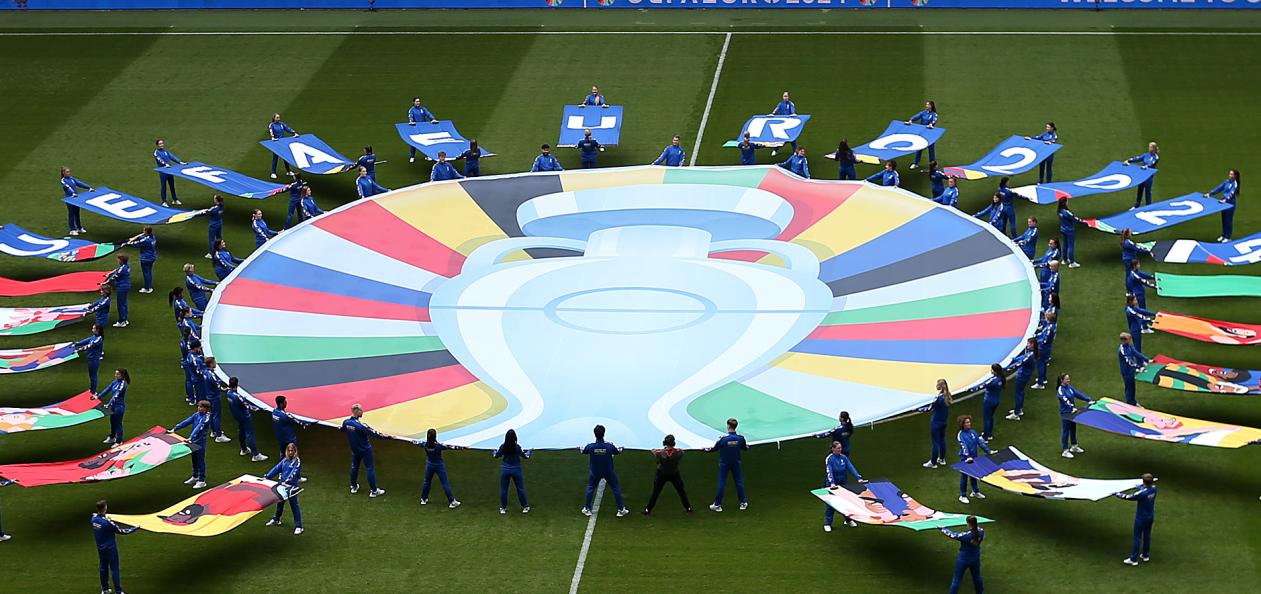
For instance, at a recent major final, pitch graphics had to be installed precisely within strict timing windows, under broadcast scrutiny. That level of control isn’t about prestige - it’s the same discipline that keeps everyday installations accurate in offices, retail environments and public buildings.
Good installation is risk management.
It protects your brand in the real world.
6. Ongoing Brand Consistency Becomes Easier, Not Harder
Most organisations don’t need a huge one-off transformation - they need consistency across multiple updates:
- seasonal retail refreshes
- boutique rebrands
- site hoardings
- office refurbishments
- event cycles
- maintenance and replacements
A partner retains knowledge of your brand, your materials, your constraints and your preferred processes. That means each update is faster, easier and more accurate than the last.
Recent retail refreshes and boutique upgrades show how much smoother work becomes when a team already understands the environment they’re returning to - from light levels to bespoke fixtures.
Consistency isn’t built through one project.
It’s built through continuity.
7. So, When Do You Actually Need a Visual Communications Partner?
You don’t need one for everything.
But you do need one when:
- deadlines are tight
- the space is public-facing
- the install is safety-critical
- environments are complex
- quality needs to be consistent across multiple sites
- sustainability matters
- design and production need to align
- failure would be reputationally costly
The question isn’t “Who can print this?”
It’s “Who can make sure this works in the real world?”
Final Thought
Print is one component of visual communication - but it isn’t the whole picture.
In busy, high-pressure environments, you’re not just buying graphics.
You’re buying reliability.
You’re buying alignment.
You’re buying someone who prevents problems you never want to experience.
A visual communications partner doesn’t replace your designers, your planners or your internal teams.
They simply connect the dots between them - so your project lands smoothly, safely and exactly as you intended.
Heading
Read Next...
Mastering the Art of Wayfinding Signage: Guiding with Purpose and Precision
Heading
Learn More...
What We Do