
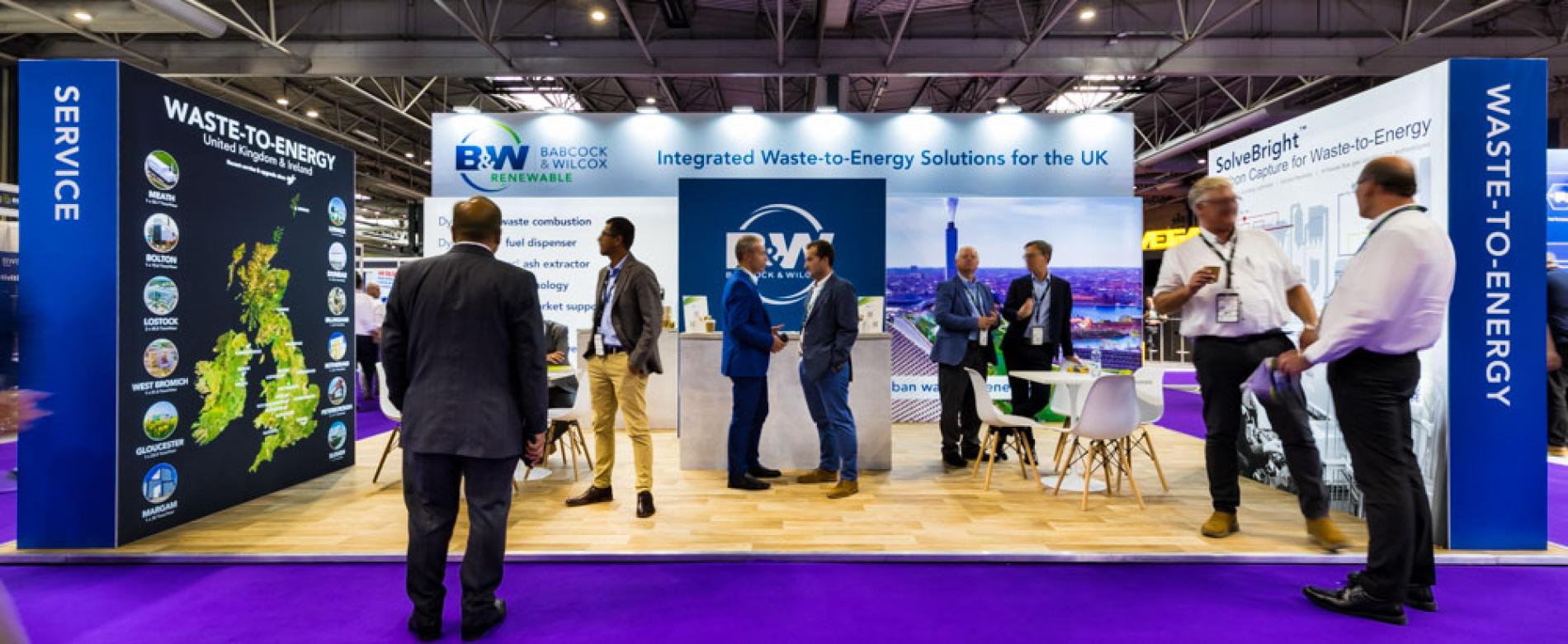
3 Quick Wins for More Sustainable Exhibiting
After months of planning, production and installation, the show opens, the stand does its job, and within hours of the event closing everything is dismantled and removed.
It’s one of the realities of exhibiting. But it’s also why sustainability has become an increasingly important topic for exhibitors. Marketing teams are under growing pressure to reduce waste, demonstrate responsible business practices and ensure their exhibition presence reflects the values their organisation promotes elsewhere.
The encouraging part is that making exhibitions more sustainable doesn’t always require a complete redesign of your stand. In many cases, a few practical decisions early in the planning process can make a meaningful difference.
Here are three simple changes that can help reduce the environmental impact of exhibiting.
1. Design Your Stand to Be Used More Than Once
Start by thinking beyond a single event when planning your exhibition stand.
One of the biggest sources of waste in exhibitions comes from stands that are created for a single show and then rebuilt for the next one. For exhibitors attending several events each year, this can quickly lead to unnecessary material use and repeated production costs.
Designing with reuse in mind allows the same core stand structure to support multiple exhibitions. Modular stand systems and adaptable layouts make this easier by allowing elements to be reconfigured for different stand sizes or event formats.
Separating structural components from graphic elements also helps extend the life of a stand. Messaging and visuals can be updated for each show while the underlying structure remains the same.
By designing your stand to be reused, you reduce waste while making better long-term use of your exhibition investment.
2. Choose Materials That Are Easier to Reuse or Recycle
Take time to consider how the materials used in your stand graphics and structures will be handled after the event.
Material selection plays a significant role in the environmental impact of exhibition stands and graphics. Traditional display substrates have often been difficult to recycle or reuse once an event has finished.
Today, many exhibitors are moving towards alternatives that provide more sustainable end-of-life options. Recyclable substrates, PVC-free materials and fabric-based display graphics are increasingly common choices.
Fabric graphics, for example, can often be reused across multiple events, while recyclable materials allow graphics to be responsibly processed after use rather than sent to landfill.
Making thoughtful material choices during the planning stage can significantly reduce waste while still delivering the visual impact that exhibitions require.
3. Plan What Happens After the Event
Before the show even opens, decide what will happen to your stand once it comes down.
One of the biggest sustainability challenges in exhibitions is what happens when the show ends. Without a plan in place, stands and graphics can quickly become unnecessary waste.
Instead, consider the full lifecycle of your exhibition materials from the start. Identify which elements will be reused at future events and which can be recycled or repurposed afterwards.
Structural components, lighting and furniture are often suitable for reuse across multiple shows. Graphics and materials can also be specified so they can be recycled or responsibly recovered once the event is over.
Thinking about the end of the lifecycle during the planning stage helps reduce waste and ensures exhibition materials are used as efficiently as possible.
Sustainable Exhibiting Starts with Simple Decisions
Sustainable exhibiting doesn’t have to mean compromising on creativity or visual impact. In many cases, it simply comes down to making a few more thoughtful decisions during the planning stage.
Designing stands so they can be reused, choosing materials with a more responsible end-of-life option, and thinking ahead about what happens after the event are all practical steps that can significantly reduce waste.
For exhibitors attending multiple events each year, these small changes can quickly add up - reducing environmental impact while also making better long-term use of your exhibition investment.
If you’re planning your next exhibition stand, it’s worth having these conversations early in the process. A few simple decisions at the start can make a meaningful difference by the time the show floor opens.

Heading
Read Next...
Sustainability isn't a products - it's how you work
Heading
Learn More...
Events & Experiences Signage